
Define Scope
Determine the scope of your risk management activities. Identify the areas, processes, projects, and functions that will be covered by the risk management framework.
 +91-98995 89111
 Itsec@alliedboston.com
ISO 31000 provides principles and guidelines for effective risk management across the organization. It helps identify, assess, and mitigate risks to support informed decision-making and strategic objectives.



ISO 31000 is an international standard for Risk Management. It provides principles, frameworks, and processes for managing risks in organizations of all types and sizes. The standard is designed to help organizations identify, assess, treat, and monitor risks in a systematic and transparent manner. Adherence to ISO 31000 can help organizations make informed decisions, allocate resources effectively, and achieve their objectives.
For comprehensive guidance and support in adhering to ISO 31000 standards, contact us. We are here to assist your organization in implementing effective risk management practices and achieving compliance with ISO 31000.
likelyhood of achieveing objectives.
identification of opportunities and threats.
allocation of resources for risk treatment.

Determine the scope of your risk management activities. Identify the areas, processes, projects, and functions that will be covered by the risk management framework.
Identify the risks that are relevant to your organization's objectives. Conduct a systematic risk assessment by analyzing potential events, their likelihood, and impact. Evaluate the level of risk and prioritize them based on their significance.
Develop risk treatment plans to address the identified risks, and define risk response strategies that include risk mitigation, risk avoidance, risk transfer, or risk acceptance. Implement risk controls and measures as outlined in the risk treatment plans. This may involve implementing new processes, procedures, or technologies to manage and mitigate risks effectively.
Develop a risk management framework based on the ISO 31000 principles. This includes defining risk management processes, methodologies, and tools that will be used throughout the organization.
Provide training and awareness programs to employees and stakeholders on risk management principles and practices. Ensure that individuals understand their roles and responsibilities in managing risks effectively.
Implement processes to monitor and review risks on an ongoing basis. Regularly assess the effectiveness of risk controls and treatments. Update risk assessments and treatment plans as necessary.
Perform regular internal audits to assess the effectiveness of your risk management practices. Identify areas of non-compliance or improvement opportunities. Take corrective actions where necessary.
Obtain compliance audit or certification for ERM - ISO 31000 by conducting regular audits, identifying non-compliance areas, and taking necessary corrective actions for effective risk management. Align risk management policies, procedures, and documentation with ISO 31000 standards to ensure adherence and improve organizational resilience.
Foster a culture of continual improvement by regularly reviewing and updating your risk management framework and practices. Stay informed about emerging risks, industry trends, and best practices to enhance your risk management capabilities.
ISO/IEC 20000-1 : 2018

ISO 27001 : 2022
ISO 28000 : 2022
ISO 55001 : 2024
ISO 27701 : 2025
ISA / IEC 62443
ISO 22301 : 2019
ISO 42001 : 2023






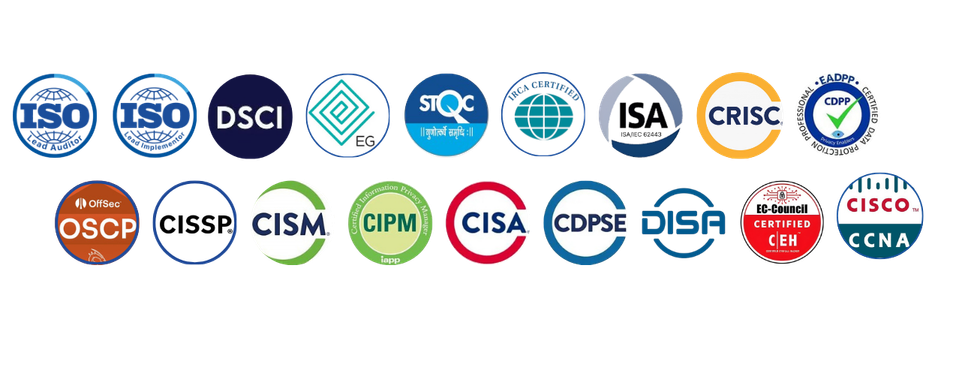


Every organisation deserves a cybersecurity partner that delivers clarity, confidence, and technical excellence. At Secure n Comply, we combine deep domain expertise, industry-leading certifications, and modern security frameworks to address today’s complex cyber and compliance challenges effectively. Our customer-first mindset ensures solutions are practical, scalable, and aligned with your business goals. By leveraging advanced technologies and a proactive approach, we help organisations strengthen resilience, maintain compliance, and stay secure from day one and beyond.



Applications secured
IPs Secured
Cybersecurity Projects
Compliance


 May 25 , 2026


