 +91-98995 89111
 Itsec@alliedboston.com
Phishing Simulation
Security
Phishing Simulation tests employee awareness by safely simulating real phishing attacks to identify human risk and improve security behavior.
Check your applicable
compliances


Phishing Simulation Security
Phishing is a type of Social Engineering attack that aims to trick individuals into giving away their sensitive information or access credentials by posing as a legitimate entity or service. These attacks often involve sending deceptive links through Emails or messages to unsuspecting individuals, directing them to a fake website or login portal that appears authentic.
This type of attack simulation is designed to replicate the tactics, techniques, and procedures used by real-life threat actors to identify vulnerabilities and weaknesses within an organization's security posture. Security teams can evaluate an organization's ability to detect and respond to sophisticated and targeted threats through a phishing simulation. By identifying the risk and susceptibility of attacks against key business information assets, remediation plans can be developed to improve overall security posture and protect against future attacks.
Phishing simulations that can help an organization stay safe:
Email Phishing: This type of simulation sends fake phishing emails to employees to assess their ability to classify and report them. With this, employees learn how to identify suspicious emails, such as those that contain unfamiliar links or attachments.
-

Spear Phishing: Spear phishing simulation is a more targeted version of the email phishing simulation. Cyber Security professionals craft emails that are personalized to specific employees, based on publicly available information. This helps employees understand that attackers can use publicly available information to craft convincing phishing emails.
-
Whaling: Whaling simulation targets high-profile individuals in the organization, such as CEOs and senior executives. The simulation replicates a phishing email that appears to be from a trusted source, such as a company lawyer or regulatory body.
-
Smishing: The smishing simulation is similar to the email phishing simulation but targets mobile devices.
-
Vishing: Vishing simulation replicates a voice or phone call from an attacker. The attacker may use social engineering tactics to gain the employee's trust and extract sensitive information. This simulation helps employees understand the importance of verifying the identity of the person on the other end of the phone and to be cautious when sharing sensitive information.
Key Benefits

Evaluates real-world employee readiness against phishing and social engineering attacks.

Identifies human-centric vulnerabilities and high-risk users across the organization.

Builds a strong cybersecurity awareness culture through continuous, realistic simulations.

Enables targeted, data-driven training based on user behavior and risk exposure.

Improves detection, reporting, and response time to phishing attempts across teams.

Approach & Methodology
- Conduct a kickoff meeting to understand organizational structure, user groups, and phishing risk tolerance.
- Define scope including target users, departments, email domains, and simulation frequency.
- Establish rules of engagement to ensure ethical execution and avoid business disruption.
- Select phishing scenarios aligned with real-world threats relevant to the organization.
- Design realistic phishing templates such as credential harvesting, malicious attachments, or business-themed lures.
- Customize email content, sender identities, landing pages, and payloads to reflect current attacker techniques.
- Configure tracking parameters to measure user interaction and response behavior.
- Launch controlled phishing campaigns to targeted users as per the defined schedule.
- Monitor email delivery, open rates, link clicks, credential submissions, and reporting actions.
- Ensure no malicious payloads are delivered and no actual harm is caused.
- Assess user awareness and response behavior to phishing attempts.
- Evaluate effectiveness of email security controls, user reporting mechanisms, and SOC alerting.
- Identify gaps in detection, response time, and employee awareness.
- Prepare a detailed report covering campaign results, user metrics, risk levels, and trends.
- Highlight high-risk user groups and common failure patterns.
- Provide actionable recommendations including awareness training, policy updates, and control improvements.
- Support follow-up simulations to measure improvement over time.
Deliverables
As a leading cyber security firm, Secure n Comply emphasizes fully communicating the value of its service and findings.
- Executive New Report
- Remediation
- Compliance Certificate
- Support by Technical Experts
- Suggestions as per Industry Best Practices
Social Engineering
Red Teaming

Blue Teaming
Services
Compliance Management System
Compliance Assessment Framework
Solutions
Our Engagement Model
Discover & Define


Mind the Gap
Assess & Treat Risks


Deploy Controls
Monitor & Improve

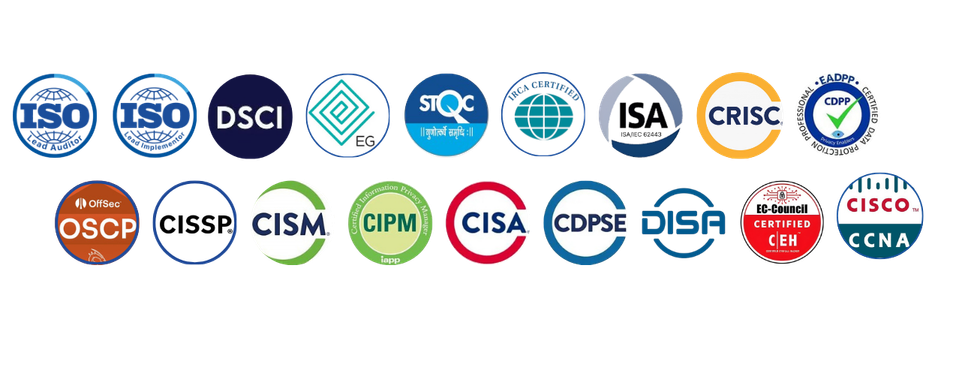
Backed by globally recognized
certifications
How We Support


Our Partners


Industries We Serve


Why Organisations Choose Us
Every organisation deserves a cybersecurity partner that delivers clarity, confidence, and technical excellence. At Secure n Comply, we combine deep domain expertise, industry-leading certifications, and modern security frameworks to address today’s complex cyber and compliance challenges effectively. Our customer-first mindset ensures solutions are practical, scalable, and aligned with your business goals. By leveraging advanced technologies and a proactive approach, we help organisations strengthen resilience, maintain compliance, and stay secure from day one and beyond.
-

Innovative Security
-

Trusted Solutions
-

Client Focused
-

Certified Experts
0+
Applications secured
0+
IPs Secured
0+
Cybersecurity Projects
0+
Compliance
Read Our Latest
Blogs

 May 25 , 2026


