 +91-98995 89111
 Itsec@alliedboston.com
IoT
Security
Securing Every Connected Device. Protecting Every Interaction.
Check your applicable
compliances




IoT Security
IoT Security refers to a set of processes, technologies, tools, and methods used to protect Internet of Things (IoT) devices, networks, and the data they generate from cyber threats.
IoT ecosystems consist of a large number of connected devices such as sensors, cameras, smart controllers, wearables, and industrial IoT components—often deployed at scale and with limited built-in security. Any compromise can lead to data leakage, service disruption, or unauthorized control of devices. At Secure n Comply, we proactively assess IoT environments to identify vulnerabilities and reduce security risks across connected ecosystems.
Securing IoT systems is critical to ensure data integrity, device availability, and secure communication. Common IoT security risks include:
-

Insecure Device Configuration: Weak default credentials, exposed services, and improper device configurations can allow attackers to gain unauthorized access to IoT devices.
-
Insecure Communication: Lack of encryption or weak authentication in device-to-device or device-to-cloud communication can lead to data interception and manipulation.
-
Firmware and Update Vulnerabilities: Unsigned firmware, insecure update mechanisms, or outdated device software can be exploited to introduce malicious code or gain persistent access.
Key Benefits

Protect connected devices from unauthorized access and tampering.

Secure device-to-cloud communication to prevent data interception.

Detect threats early across large and distributed IoT environments.

Maintain device integrity through secure firmware and update mechanisms.

Improve visibility and control across the entire IoT ecosystem.

Approach & Methodology
- Gather information about IoT components such as sensors, cameras, smart devices, gateways, edge devices, IoT platforms, and supporting network infrastructure.
- Identify device types, IP ranges, communication protocols (MQTT, CoAP, HTTP/HTTPS, AMQP, BLE, Zigbee, etc.), exposed services, management interfaces, and device roles.
- Conduct a kickoff meeting to understand the IoT architecture, data flow, deployment scale, and nominate SPOC(s).
- Perform a walkthrough of the IoT ecosystem including device, gateway, cloud, and backend integrations.
- Define the scope and type of testing (Black Box, Gray Box, White Box, or Configuration Review) specific to IoT components.
- Utilize commercial and open-source tools suitable for IoT security testing, including device discovery, network analysis, firmware analysis, and protocol testing tools.
- Apply IoT-specific hardening and security best practices for devices, gateways, and IoT platforms.
- Define the testing strategy and prioritize critical devices, gateways, and data-processing components based on exposure and risk.
- Research known vulnerabilities, CVEs, vendor advisories, and end-of-life/end-of-support status for identified IoT devices, firmware, and platforms.
- Identify potential threats affecting IoT devices, communication channels, gateways, and cloud integrations.
- Perform automated and manual testing to detect misconfigurations, weak authentication, insecure protocols, and known vulnerabilities.
- Conduct firmware and configuration reviews to identify hardcoded credentials, insecure update mechanisms, and sensitive data exposure.
- Perform safe validation techniques to confirm impact without disrupting device functionality or operations.
- Align assessment activities with industry standards such as OWASP IoT Top 10, NIST, and CIS guidelines.
- Capture evidences through device logs, firmware analysis outputs, screenshots, and network traffic captures.
- Prepare an assessment report detailing identified IoT vulnerabilities, affected devices, severity, impact, and supporting evidences.
- Perform risk evaluation based on data sensitivity, device exposure, scalability of attack, and business impact.
- Share remediation recommendations including device hardening, secure communication, firmware updates, and access control improvements.
- Conduct revalidation testing to confirm remediation effectiveness across IoT devices and platforms.
- Verify that identified vulnerabilities and misconfigurations cannot be re-exploited or bypassed.
- Share the final report with clear Open/Closed status for each finding.
- Submit final deliverables and compliance documentation (if applicable), including regulatory or customer-specific requirements.
Deliverables
As a leading cyber security firm, Secure n Comply emphasizes fully communicating the value of its service and findings.

- Executive New Report
- Remediation
- Compliance Certificate
- Support by Technical Experts
- Suggestions as per Industry Best Practices
Infrastructure Security
Wireless

IT
OT
Services
Compliance Management System
Compliance Assessment Framework
Solutions
Our Engagement Model
Discover & Define


Mind the Gap
Assess & Treat Risks


Deploy Controls
Monitor & Improve

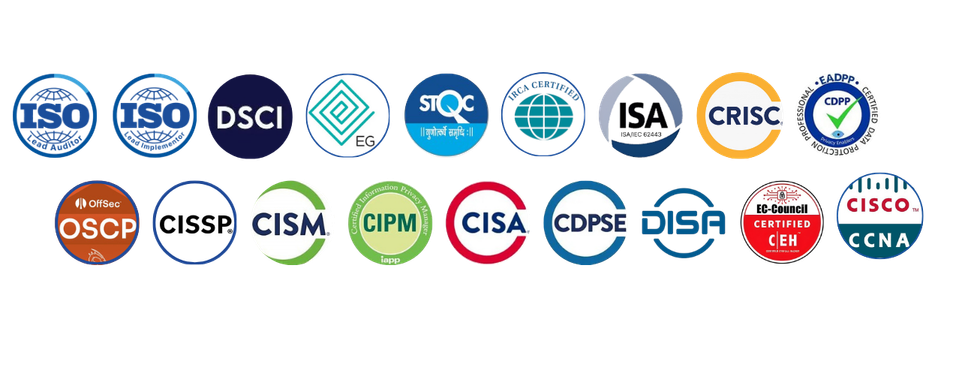
Backed by globally recognized
certifications
How We Support


Our Partners


Industries We Serve


Why Organisations Choose Us
Every organisation deserves a cybersecurity partner that delivers clarity, confidence, and technical excellence. At Secure n Comply, we combine deep domain expertise, industry-leading certifications, and modern security frameworks to address today’s complex cyber and compliance challenges effectively. Our customer-first mindset ensures solutions are practical, scalable, and aligned with your business goals. By leveraging advanced technologies and a proactive approach, we help organisations strengthen resilience, maintain compliance, and stay secure from day one and beyond.
-

Innovative Security
-

Trusted Solutions
-

Client Focused
-

Certified Experts
0+
Applications secured
0+
IPs Secured
0+
Cybersecurity Projects
0+
Compliance
Read Our Latest
Blogs

 May 25 , 2026


